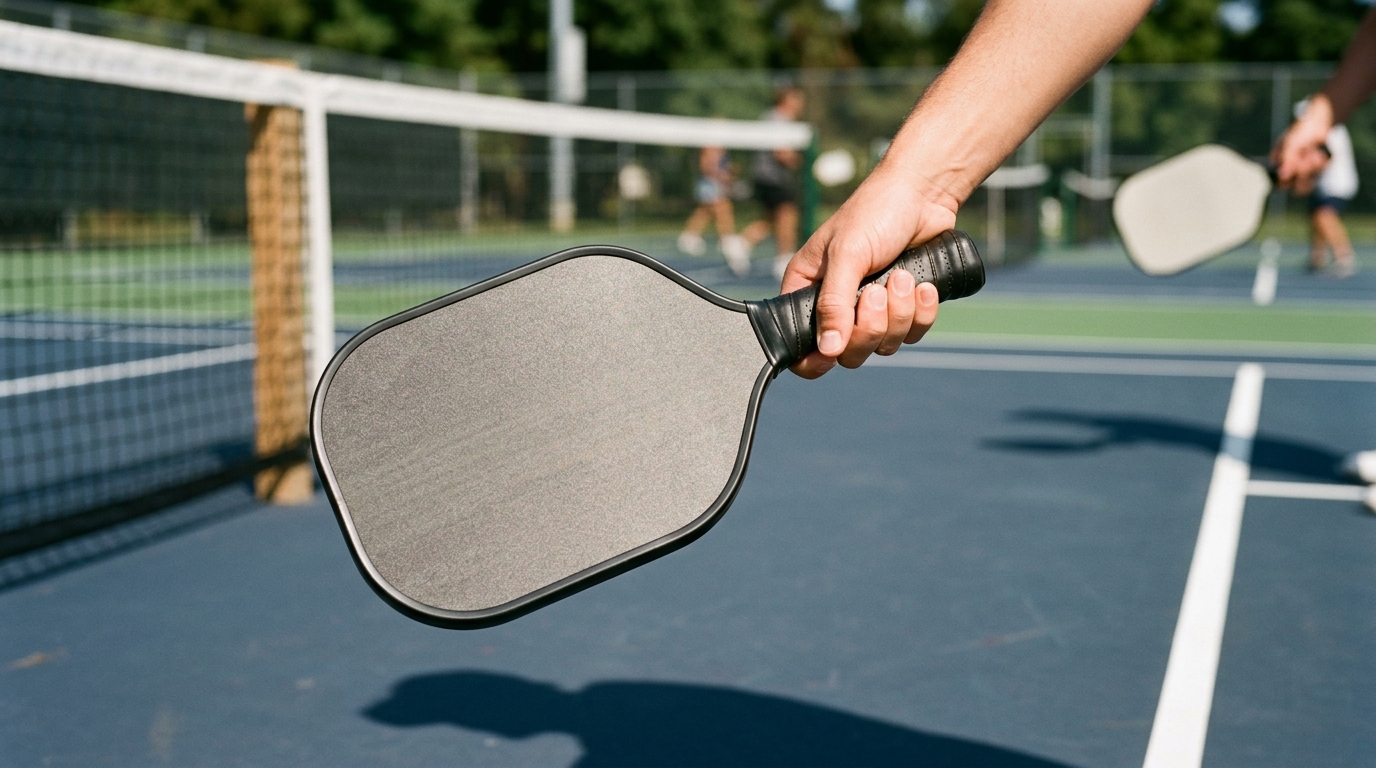
Versus comparison
Disclosure: This article may contain affiliate links. As an Amazon Associate, the site may earn from qualifying purchases.
Pickleball Paddle Buying Guide: Weight, Core Thickness, and Grip Size (And Who Should Skip ‘Power’ Paddles) is written as a practical decision guide, not a static product claim. Listings, prices, seller details, and included accessories can change, so the live Amazon page is always the source of truth before checkout.
Fit-first: match paddle specs to player type (beginner, tennis background, elbow pain risk).
Short verdict
Pick the side that removes your biggest constraint. A comparison only helps when it shows which trade-off affects your actual setup.
Option A usually wins when
You want simpler setup, lower cost, lower weight, or fewer compatibility risks.
Option B usually wins when
You need stronger specs, better durability, more capacity, or a more specialized feature set.
| Decision factor | Lower-complexity option | Higher-spec option |
|---|---|---|
| Fit | Easier to verify and return | Better when exact measurements or support are clear |
| Performance | Enough for light or occasional use | Better for daily, travel, emergency, or multi-device use |
| Cost | Lower upfront price | Can be cheaper long-term if parts and durability are better |
| Risk | Fewer features to fail | Needs clearer warranty and recent review evidence |
Live product source used for this check
| Listing field | What this draft uses | Why it matters |
|---|---|---|
| Example Amazon product | JOOLA Pickleball Paddle with Textured Carbon Grip Surface | Keeps the CTA pointed at a real product detail page instead of a search-results page |
| Listed specs/features | Textured carbon pickleball paddle; polypropylene core; lightweight racket line | Grounds the article in product data that can be verified before checkout |
| Link type | Direct Amazon /dp/ product page | Avoids broad search queries that can show calculators, accessories, or unrelated items |
Specs that actually decide the purchase
| Spec | Why it matters | What to verify |
|---|---|---|
| Weight | Affects fatigue, control, and elbow stress | Many paddles sit around 7.2-8.5 oz |
| Grip circumference | Wrong grip can cause wrist or elbow discomfort | Common sizes run about 4.0-4.5 inches |
| Core thickness | 14mm often feels quicker; 16mm often feels softer and more controlled | Match thickness to control vs pop |
| Face material | Graphite, fiberglass, and carbon fiber feel different on spin and pop | Compare material claims with recent player reviews |
Concrete benchmarks to use
| Benchmark | Working number | How to apply it |
|---|---|---|
| Fit tolerance | 1 inch / 3 cm | Leave room for seams, handles, cases, brackets, swelling, or measurement error |
| Reserve margin | 30% | Avoid buying a product that only works in perfect conditions |
| Review window | 6 months | Recent complaints catch listing changes and quality shifts |
| Replacement check | 12 months | Filters, batteries, bags, seals, brushes, and cables change real cost |
Buying note
Verify the fit before buying
Match the listing details to your home, trip, device, family need, or training routine. Small spec mismatches are where many bad purchases start.
Red flags before checkout
| Red flag | Why it hurts | What to do |
|---|---|---|
| Vague dimensions | The item may not fit the intended space, bag, table, device, or body size | Buy only when the critical measurement is listed |
| Marketing-only rating | The claim may not hold up under real use | Look for exact numbers, standards, or manual language |
| Repeated recent complaints | A known failure pattern may be showing up | Read recent 1-3 star reviews before trusting the average |
Buying note
Use the live listing as the source of truth
Product pages change. Before ordering, review current photos, recent reviews, warranty notes, and return terms.
Bottom line
Do not buy pickleball paddle buying guide from headline claims alone. Match paddle weight, grip circumference, core thickness, face material, and swing weight to your exact use case, then use recent reviews and seller terms as a final risk check. A clear, boring listing beats a flashy one that hides the number you need.